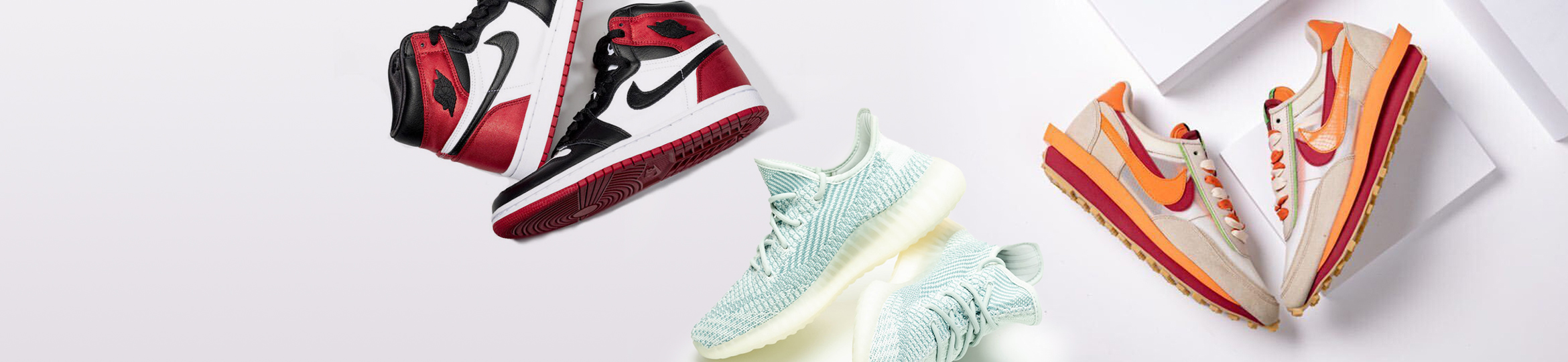
Wholesale Shoes Market by Country

1. Why This Comparison Actually Matters in 2026
Most wholesale buyers pick a region by accident. They source from China because someone on Reddit said "just go to Putian." They sell into the US because that's where the hype is. They ignore Europe entirely because it seems complicated.
That's a mistake — and an expensive one in 2026.
The three markets have diverged more in the last 18 months than in the previous five years combined. Tariffs reshaped US import economics in mid-2025. China's domestic sneaker culture is undergoing the fastest brand loyalty shift in a decade. Europe's regulatory environment got tighter while premium demand accelerated.
If you're moving inventory across borders — or planning to — you need to understand these differences not as theory but as something that shows up on your P&L. Here's what I've learned sourcing and selling across all three.
2. Sourcing: Where the Shoes Come From
China: The Factory Floor
Let's be blunt about scale: China exported 900 billion pairs of footwear in 2025, worth $415.5 billion. That's not a typo. The country still produces roughly 53% of all shoes imported into the US, even after years of brands diversifying to Vietnam and Indonesia.
The manufacturing is hyper-concentrated. Within a 50-kilometer radius in Fujian province, you have entire ecosystems that handle everything from sole molding to final QC. Component delivery times are 30% faster inside these clusters than if you tried to run a distributed supply chain. Sample development can turn around in 10-14 days.
| Hub | Scale | Best For |
|---|---|---|
| Putian | >4,200 factories, >12 billion pairs/yr | Custom orders, smart manufacturing, rapid prototyping |
| Jinjiang | 100–120 billion pairs/yr | Mass-volume OEM/ODM, sports/athletic footwear |
| Quanzhou | Direct Xiamen port access | High-volume export, logistics efficiency |
| Dongguan | Precision manufacturing | Premium/high-end athletic shoes |
The pricing advantage is real. Chinese wholesale prices run 25–40% below European or North American equivalents. The average export price across all footwear categories was $4.62 per pair in 2025. Before you get excited — that's the average across everything from flip-flops to running shoes. A mid-tier athletic sneaker in wholesale quantities lands closer to $12–$22 FOB. Still dramatically cheaper than anything you'll find domestically.
But there's a catch that new buyers consistently underestimate: the distance between "cheapest supplier" and "most profitable supplier" is wider here than anywhere else. A factory that saves you $0.50 per pair but ships with a 10% defect rate costs you substantially more than one charging an extra dollar with a 97%+ on-time delivery rate. I've watched people burn entire container orders learning this.
US: Not a Sourcing Market — a Distribution Market
Nobody sources sneakers from American factories at scale. The US is a buying market, not a manufacturing one. Wholesale in the US context generally means one of three things: buying closeout pallets from retailers (TJ Maxx, Ross, Nordstrom Rack), working with brand-authorized distributors who get allocation from Nike/Adidas/Jordan, or the gray market — buying retail pairs on discount and reselling at wholesale margins.
The tariff situation, however, has fundamentally changed the math. Since August 2025, importing sneakers from China into the US carries a combined tariff burden of 30% (temporary benchmark) + MFN rates of 8.5–48%+ depending on the exact HTS code. That puts effective duty rates between 38.5% and 78%+ on Chinese-origin footwear. All 442 exclusion requests filed by the footwear industry were rejected. There's no workaround.
Vietnamese imports now carry a 20% tariff. Indonesian: 19%. Even Italian luxury sneakers face a 15% reciprocal tariff. And the $800 de minimis exemption — the rule that let small resellers import goods duty-free — was eliminated in August 2025. Every pair, no matter the value, gets taxed now.
Europe: The Premium Manufacturing Niche
Europe occupies a strange middle ground. It's not competitive with China on volume manufacturing — that ship sailed decades ago. But it maintains a powerful position in premium and luxury production, particularly from Italy. The Montebelluna and Florence regions produce high-end athletic and fashion sneakers that command $300–$800+ retail. "Made in Italy" carries brand equity that Chinese manufacturing, for all its technical sophistication, simply doesn't have — yet.
For wholesale buyers, this creates two distinct sourcing strategies in Europe: either pay up for European-made premium goods with authentic provenance, or import from China/Asia and eat the import duties. EU customs duty on sports footwear from China is 17%, plus VAT which averages ~21% across member states (ranging from 18% in Malta to 27% in Hungary). On a theoretical $10,000 shipment, you're looking at roughly $1,700 in duty and another $2,457 in VAT — about $4,157 total before it hits your warehouse.
One advantage Europe has that the US doesn't: rail freight from China. The China-Europe Railway Express runs 16–22 days at $2–$4/kg, splitting the difference between sea freight (slow but cheap) and air freight (fast but expensive). It's not an option for US-bound cargo.
3. The Real Cost Equation Nobody Shows You
Here's the comparison that actually matters for a wholesale buyer. Same product — a mid-tier athletic sneaker, 2,000 pairs, FOB Putian at $15/pair. Shipped to each market.
| Cost Component | → US | → EU (Germany) |
|---|---|---|
| FOB (2,000 pairs × $15) | $30,000 | $30,000 |
| Sea freight (~1,500kg) | $1,500–$3,000 | $1,500–$3,000 |
| Import duty | ~$11,550–$23,400 (38.5–78% on China origin) |
~$5,610 (17% on sports footwear) |
| VAT | N/A (no federal VAT) | ~$7,478 (19% on CIF + duty) |
| Customs broker + handling | $400–$800 | $500–$1,000 |
| Total landed cost | $43,450–$57,200 ($21.73–$28.60/pair) |
$44,588–$47,088 ($22.29–$23.54/pair) |
Look closely at what's happening here. The US is theoretically a cheaper market to land goods in — no VAT — but the China tariffs have blown a hole in that advantage. At the high end of the US duty range, your landed cost actually exceeds the EU. And if the 30% China benchmark tariff rises after November 2025 (which is the industry's base-case expectation), US importing gets even worse.
This is why so many mid-market wholesalers I talk to are scrambling to Vietnam, Indonesia, and Cambodia for US-bound inventory. Vietnam's 20% tariff is still painful but it's predictable. China's 30% temporary rate expires in November 2025 with no clarity on what comes next. Uncertainty is a margin killer.
The hidden cost nobody talks about: capital lockup. Sea freight from China to the US takes 25–33 days, to Europe 27–35 days. Add customs clearance and last-mile delivery, and you're looking at 5–7 weeks between paying your supplier and having sellable inventory. That's dead money. Air freight cuts transit to 6–12 days but costs $5–$9/kg — on a 1,500kg shipment, that's $7,500–$13,500. For the math to work, your margin per pair needs to justify roughly $4–$7 in incremental freight cost.
4. Consumer Culture: What Sells Where
The same shoe doesn't have the same value in different markets. I've watched pairs that sit dead on StockX US sell out in three days on European platforms — and vice versa. The cultural differences aren't subtle.
United States: Hype-Driven, Brand-Loyal, Resale-Obsessed
The US sneaker market is the most mature resale ecosystem on the planet. StockX, GOAT, and eBay process millions of transactions monthly. The consumer has been trained to think of sneakers as quasi-financial assets — limited drops, authentication, price charts, "hold or sell" debates. This creates both opportunity and volatility.
Nike and Jordan still dominate here, though their grip is loosening. North America delivered $5.026 billion for Nike in Q3 FY2026 (+3%), making it the one bright spot while China declined 7%. Jordan Brand specifically commands premiums that make European buyers do double-takes — Travis Scott collaborations trade at 68–75% CAGR in the US secondary market. The "sneakerhead" demographic here skews 18–34, male-dominated, and heavily concentrated in NYC, LA, and Miami.
The wholesale opportunity in the US is fundamentally about access arbitrage. End consumers pay premiums for limited pairs they can't get at retail. Wholesale buyers who can supply those pairs — whether through brand relationships, liquidation channels, or international sourcing — capture the spread.
China: The Guochao Earthquake
Something happened in China's sneaker market that nobody outside the country fully grasps yet. Five years ago, a Chinese sneakerhead would have prioritized Nike and Adidas above all else. Today? Li-Ning's Way of Wade series posted a 560% increase in US market share in 2023 — a signal of how drastically the domestic landscape has shifted. ANTA Group spent over CNY 1.6 billion ($221.4 million) on R&D in 2023 alone, acquiring brands like Maia Active and building technology that rivals the global giants.
The "guochao" (国潮, national wave) movement, sparked by Li-Ning's Wu Dao collection at 2018 New York Fashion Week, has evolved from a niche cultural statement into a mainstream commercial force. Chinese consumers — particularly under 35 — now view domestic brands as symbols of cultural pride rather than second-tier alternatives.
Nike's Greater China revenue dropped 7% YoY to $1.615 billion in Q3 FY2026. Footwear specifically fell 7%, equipment collapsed 21%. This isn't a cyclical dip — it's structural. Local competition combined with nationalist sentiment and genuine quality improvements has permanently altered the competitive landscape.
For wholesale buyers, this means the China sell-in strategy that worked in 2020 doesn't work in 2026. Importing Nike/Jordan into China and expecting the old premiums is a losing bet. The opportunity has flipped: sourcing Chinese brands (Li-Ning, ANTA, Xtep, 361°) for export markets, particularly Southeast Asia and the Middle East, where Chinese brand cachet is rising and prices haven't caught up yet.
Europe: Premium Taste, Sustainability Obsession, Fragmented Reality
The European sneaker market — €24.35 billion in 2025, projected €39.32 billion by 2034 — looks unified on a spreadsheet but it's anything but in practice. Germany (22.3% of regional market) has deep athletic footwear culture thanks to Adidas and Puma being headquartered there. The UK (second-largest) is driven by streetwear and resale culture. France is where luxury fashion and sneakers collide. Italy is the premium manufacturing stronghold. Spain is aggressively price-sensitive.
| Market | Dominant Consumer Trait | Top-Performing Silhouettes | VAT |
|---|---|---|---|
| Germany | Athletic heritage, sustainability-first | Adidas Samba/Gazelle, runners, functional | 19% |
| UK | Streetwear-driven, resale-active | Nike Dunk, Jordan, New Balance | 20% |
| France | Luxury-fashion fusion, IP enforcement strict | Designer collabs, premium, limited editions | 20% |
| Italy | "Made in Italy" loyalty, craftsmanship premium | Luxury sneakers, artisanal craftsmanship | 22% |
| Spain | Price-sensitive, youth-driven, lightweight preference | Low-tops, affordable lifestyle models | 21% |
The sustainability angle in Europe isn't marketing fluff — it's a regulatory and consumer reality. Low-top sneakers command 60.6% of the European market. Branded products hold 70.6% share. The luxury segment is growing at 15.1% CAGR, the fastest in any price tier. European consumers are spending more per pair but buying fewer pairs — quality over quantity. This is the opposite of the US market's volume-driven approach.
For wholesalers, Europe rewards premium positioning and punishes generic product. A well-sourced Italian-made sneaker can command 3–5× the wholesale price of a comparable Chinese-made pair. But the buyer expectations around materials, packaging, and brand story are proportionally higher. You can't half-ass sustainability claims in Europe — consumers and regulators will call you out, and France's IP enforcement environment is among the strictest in the world.
5. Market Maturity & Competitive Landscape
Each market is at a different stage of evolution, and that determines where the margins are.
| Dimension | China | US | Europe |
|---|---|---|---|
| Market maturity | Rapidly maturing, local brands disrupting | Highly mature, saturated resale | Mature but fragmented, premiumizing |
| Counterfeit risk | High (source market) | Moderate (authentication platforms help) | Low (strict enforcement) |
| Price sensitivity | Bifurcated: mass-market price-conscious, premium-brand loyal | Moderate: hype drives premium tolerance | High at mass tier, low at luxury tier |
| Online channel dominance | Tmall, JD.com, Douyin (TikTok) — platform-driven | StockX, GOAT, eBay, brand DTC — marketplace-driven | Zalando, H&M, Decathlon + brand DTC — retailer-driven |
| Regulatory risk | Low for domestic, complex for imports | High (volatile tariff regime) | Moderate (stable duty, high compliance bar) |
| Wholesale margin potential | Medium (local brands rising, import arbitrage shrinking) | Medium-Low (tariffs eating margin, resale compression) | Medium-High (premium focus rewards quality) |
The US market's maturity cuts both ways. On one hand, the infrastructure — authentication services, established platforms, liquid secondary markets — is unmatched. On the other, the easy money is gone. Only 47% of releases trade above retail now versus 58% in 2020. The combination of tariff increases and resale margin compression has made US wholesale a game of inches where it used to be a game of feet.
China's market is the most dynamic but also the hardest for foreign wholesalers to navigate. The platforms are different (Tmall, JD.com, Douyin), the payment ecosystem is different (Alipay, WeChat Pay), and the regulatory environment for imported goods is opaque without a local partner. China's anti-counterfeiting efforts have improved but the source market problem remains — you're buying from the same region that produces the best fakes in the world.
6. Head-to-Head Scorecard
| Factor | China | US | Europe |
|---|---|---|---|
| Sourcing cost advantage | ★★★★★ | ★★☆☆☆ | ★★☆☆☆ |
| Import ease (from Asia) | ★★★★★ | ★☆☆☆☆ | ★★★☆☆ |
| Consumer spending power | ★★★☆☆ | ★★★★★ | ★★★★☆ |
| Resale ecosystem maturity | ★★★☆☆ | ★★★★★ | ★★★☆☆ |
| Regulatory predictability | ★★☆☆☆ | ★☆☆☆☆ | ★★★★☆ |
| Counterfeit protection | ★★☆☆☆ | ★★★☆☆ | ★★★★★ |
| Premium margin potential | ★★☆☆☆ | ★★★☆☆ | ★★★★★ |
| Weighted Total | 23/35 | 20/35 | 24/35 |
Europe edges out China by one point, but the real takeaway is that the US — long assumed to be the default market — now scores lowest on this framework. The tariff instability has fundamentally altered the risk-reward profile.
7. Which Market to Play In?
There's no universal answer, but there are clear profiles that match each market.
Source from China if you:
- Have capital for MOQs of 50–1,000+ pairs per style
- Can build direct factory relationships (not through Alibaba middlemen)
- Have someone who speaks Mandarin or a reliable sourcing agent on the ground
- Are selling into markets other than the US where the 30%+ tariffs don't apply
- Need 25–40% cost advantage over Western manufacturing
Sell into the US if you:
- Already have access to allocation from Nike/Jordan/Adidas distribution
- Can source from Vietnam, Indonesia, or Cambodia (avoiding China tariffs)
- Understand the resale platform ecosystem deeply (StockX fees, GOAT consignment, eBay authentication)
- Have a strategy for the 5–10% consumer price increases expected from tariff pass-through
- Can handle the margin compression on GR pairs (only 47% of releases trade above retail)
Sell into Europe if you:
- Can position product as premium/sustainable (not generic volume)
- Are willing to navigate country-by-country VAT registration and compliance
- Have access to Italian/Portuguese manufacturing or can tell a compelling brand story
- Want regulatory stability — EU trade policy doesn't swing on executive orders
- Understand that 17% duty + ~21% VAT is the cost of entry, but premium pricing compensates
The Hybrid Play (What I'd Actually Recommend)
The smartest operators I know don't pick one market. They do this:
- Source from China — the cost advantage is too big to ignore, but vet suppliers obsessively. A 10% defect rate erases the 25% price advantage.
- Route US-bound inventory through Vietnam/Indonesia — the 20%/19% tariffs are bad but predictable. China's 30%+ temporary rate with an unknown November 2025 cliff is worse.
- Sell premium in Europe — higher per-unit margins, lower competitive intensity at the premium tier, and the fastest-growing luxury segment (15.1% CAGR) in the global sneaker market.
- Watch China as a sell-to market cautiously — the Guochao shift means foreign brands are losing ground, but Chinese brands going global (Li-Ning, ANTA) are an underexploited export opportunity for forward-thinking wholesalers.
The 2026 wholesale sneaker market isn't about picking winners — it's about not being in the wrong place with the wrong inventory when the music stops. Right now, the biggest risk is US tariff exposure on China-origin goods. The biggest opportunity is premium European distribution with Asian-sourced product that meets EU sustainability standards. The biggest wildcard is whether Chinese domestic brands crack Western markets at scale.
Your move.
Frequently Asked Questions
Is it still profitable to import sneakers from China to the US with the new tariffs?
It depends entirely on your margin structure. With effective tariff rates of 38.5–78%+ on Chinese-origin footwear, you need a very high retail-to-wholesale spread to absorb the duty hit. If you're importing basic GR (general release) sneakers with thin margins, the answer is no — switch to Vietnam (20%) or Indonesia (19%). If you're dealing in limited releases where the resale premium is 100%+, the tariffs are painful but digestible. The real problem is the uncertainty: China's 30% temporary rate expires November 2025 with no clarity on renewal.
How much cheaper is it to source from China vs Europe?
Chinese wholesale prices run 25–40% below European equivalents for comparable quality athletic footwear. The average Chinese footwear export price was $4.62/pair in 2025, though mid-tier athletic sneakers typically land in the $12–$22 FOB range. European manufacturing (primarily Italy and Portugal) can't compete on price but dominates the $200+ premium segment where "Made in Italy" carries real consumer value.
What are the biggest mistakes first-time wholesale buyers make in each market?
China: choosing the cheapest supplier over the most reliable one — a $0.50/pair saving that produces 10% defects costs more than a $1/pair premium for quality. US: underestimating tariff complexity post-2025 and assuming the old $800 de minimis rule still applies — it doesn't. Europe: treating it as one market instead of 27 different regulatory environments with different VAT rates, consumer preferences, and compliance requirements. Germany is not Spain is not France.
Which European countries are best for wholesale sneaker distribution?
Germany is the largest single market (22.3% share) with the deepest athletic footwear culture and headquarters of Adidas and Puma. The UK has the most active resale culture in Europe with strong streetwear influence. The Netherlands serves as an excellent logistics hub — Rotterdam is Europe's largest port — making it a smart warehousing location. Italy offers the highest premiums for authentic luxury positioning. France combines strong IP protection with the world's most influential fashion ecosystem.
How is the guochao movement affecting wholesale opportunities in China?
The guochao (national wave) movement has fundamentally shifted China's sneaker market. Nike's Greater China revenue dropped 7% YoY to $1.615 billion in Q3 FY2026 while domestic brands like Li-Ning (Way of Wade series +560% US market share in 2023) and ANTA (CNY 1.6 billion in R&D) are gaining share rapidly. For wholesalers, this means the old model of importing Western brands into China is deteriorating. The emerging opportunity is the reverse: exporting Chinese brands to markets where their cachet is rising but prices haven't adjusted — particularly Southeast Asia and the Middle East.
Data sources: LooperBuy 2026 China B2B Sourcing Guide, KoalaGains US Footwear Tariff Report 2025, Nike Q3 FY2026 Earnings (March 2026), China Purchasing Agent EU Import Duty Database, MarketDataForecast Europe Sneakers Market 2026, Mercado20 Nike China Report (April 2026), Marketing in Asia Guochao Analysis, ResearchAndMarkets Global Sneakers Market Report 2025-2033. Tariff rates reflect data available as of mid-2026 and are subject to policy changes. Shipping costs are estimates based on standard container rates; actual costs vary by season, fuel surcharges, and specific routing.