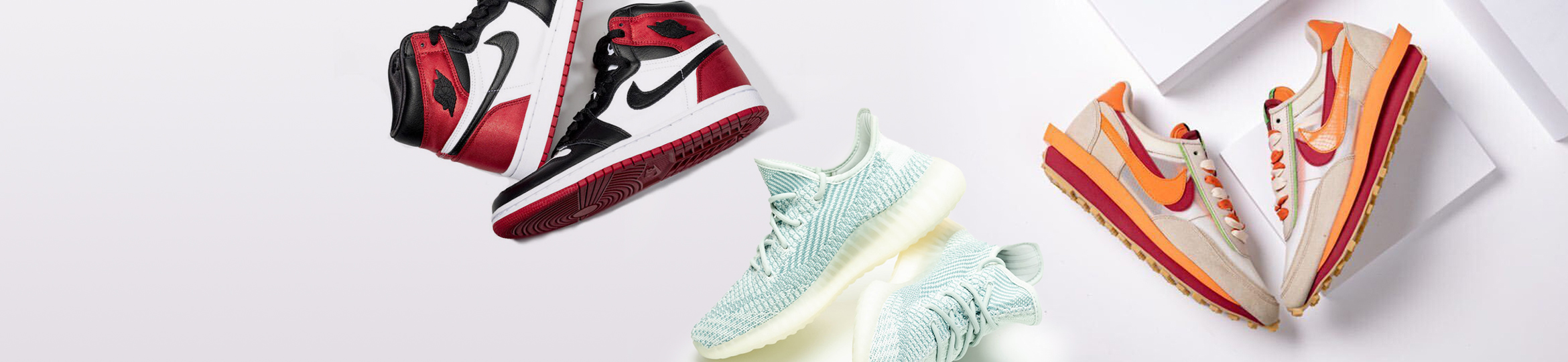
Jordan Wholesale vs Nike Wholesale

If you're stocking a wholesale sneaker inventory in 2026, you're not asking "which brand is coolest" — you're asking which brand puts the most dollars back in your pocket per unit. And the answer is not what it was three years ago. This head-to-head analysis breaks down the wholesale profit potential of Jordan, Nike, and Adidas using real resale data, wholesale pricing benchmarks, and brand-level financials — so you can allocate your buying budget where the math actually works.
❓ TL;DR — If You Only Remember 3 Things
① Jordan delivers the highest per-unit profit — AJ1 Retro High generates 50–100% wholesale-to-resale margin, and Jordan Brand's 55–60% gross margin at the corporate level signals strong downstream profitability for B2B buyers. ② Adidas Samba/Gazelle is 2026's highest-growth wholesale category — Wales Bonner collabs yield 122–233% ROI, and standard Sambas reliably return 30–50% with near-zero dead-stock risk. ③ Nike GR (general release) Dunks and Air Force 1s are the volume backbone — lower margin per unit (25–45%), but 2–5x faster inventory turnover means your cash doesn't sit.
1. The 2026 Landscape: Who Actually Moves Product?
Before we talk profit, we need to talk volume. A 200% margin on a shoe nobody buys is worse than a 30% margin on a shoe that sells out in 72 hours. Here's how the Big Three stack up on market presence:
| Metric | Jordan Brand | Nike (Main) | Adidas |
|---|---|---|---|
| 2026 Est. Revenue | ~$85–93B parent allocation | ~$51.4B (main brand) | ~€23.6B |
| Corporate Gross Margin | 55–60% | ~46% | ~51.6% |
| Resale Market Share (Volume) | ~42.6% | ~23–28% | ~8–12% |
| Avg. Resale Price Per Pair | $228 | $165 | $145 |
| Wholesale Price Range | $85–145 | $70–130 | $55–120 |
| YoY Search Growth (Wholesale Interest) | +41.7% | +14.9% (AF1) | +60%+ (Samba/Gazelle) |
💡 Key Insight
Jordan controls nearly half of the secondary market by volume — but Adidas is growing 3x faster in wholesale demand. The winner depends on whether you optimize for per-unit profit (Jordan) or growth trajectory (Adidas).
2. Jordan Brand: The Premium Profit Engine
Jordan Brand is the single most profitable entity in sneaker wholesale — bar none. The brand generates 55–60% gross margins at the corporate level (compared to Nike's 46%), and that profitability cascades down to wholesale buyers who stock the right models.
Why Jordan Commands Higher Wholesale Margins
Three structural factors make Jordan the profit leader:
① Scarcity by Design. Unlike Nike GR Dunks (which can see 50+ colorways per year flooding the market), Jordan release quantities are deliberately constrained. The AJ1 "Lost & Found" sold out within minutes at retail and resold at 2–3x MSRP within 48 hours. For wholesale buyers, this means even mid-tier Jordan colorways rarely sit in inventory for more than 30 days.
② Brand Equity That Compounds. According to FourWeekMBA's 2026 Jordan Brand analysis, Jordan commands 2–3x more retail shelf space than comparable competitors, generating 200–300M annual brand impressions. This sustained visibility means Jordan sneakers don't need "hype moments" to sell — the brand does the marketing for you.
③ The "Grail Effect." Certain Jordan models — AJ1 Chicago, AJ4 Bred, AJ11 Space Jam — have proven resale value trajectories, not just resale value points. An AJ1 Chicago purchased at wholesale for $140 in 2023 resells for $300–450 today. This means wholesale buyers can hold premium inventory without depreciation risk — a rare advantage in fast-moving consumer goods.
| Jordan Model | Wholesale Cost | Resale Value | Profit/Unit | ROI | Sell-Through |
|---|---|---|---|---|---|
| AJ1 Retro High (Chicago/Bred/Royal) | $120–145 | $250–400 | $130–255 | 50–100% | ⚡ < 14 days |
| AJ4 (Military Black/Fire Red) | $130–150 | $280–380 | $150–230 | 65–95% | ⚡ < 21 days |
| AJ11 (Space Jam/Concord/Bred) | $135–155 | $260–360 | $125–205 | 55–85% | 📦 < 30 days |
| AJ3 (White Cement/Black Cement) | $125–140 | $230–320 | $105–180 | 45–75% | 📦 < 30 days |
| Travis Scott x AJ1/AJ4 (Collab) | $150–220 | $800–2,500 | $650–2,280 | 400–1,150% | ⚡ < 7 days |
⚠️ The Jordan Wholesale Catch
Jordan wholesale allocation is the hardest to secure among the Big Three. Nike's wholesale partner program is selective, and verified B2B distributors carrying authentic Jordan inventory at competitive wholesale pricing are rare. If your supplier has "unlimited Jordan stock" at $85/pair, it's counterfeit. Authentic wholesale Jordan pricing sits at $120–155 for GR models, and B2B allocation for collab models (Travis Scott, Union, Off-White) is almost non-existent unless you have direct tier-1 retail relationships.
3. Nike (Main Brand): The Volume Powerhouse
Nike doesn't win on per-unit margin — it wins on inventory velocity. Nike's wholesale revenues hit $7.5B in Q2 FY2026 alone, up 8% YoY, driven by North American demand. For a B2B wholesale buyer, Nike is the "cash flow engine" — lower profit per pair, but you can move 300–500 units/month compared to 50–100 Jordans.
The Margin Compression Reality
Nike's average resale premium has been on a steady decline since 2021:
| Year | Nike Avg. Resale Premium | Market Context |
|---|---|---|
| 2020 | +85% | Pandemic stimulus + stimulus checks — peak demand |
| 2021 | +105% | Historical peak — never to be repeated at scale |
| 2022 | +70% | Market correction as supply caught up |
| 2023 | +55% | Dunk oversupply drags averages down |
| 2024 | +50% | Stabilizing, but GR models compressing to 25–35% |
| 2026 (Est.) | +25–45% | GR models 15–30%, collabs still 100–300% |
Source: PlottData Sneaker Resale Market Report 2025, ResellCalendar Market Analysis
Nike Model Profit Breakdown
| Nike Model | Wholesale Cost | Resale Value | Profit/Unit | ROI | Volume Potential |
|---|---|---|---|---|---|
| Dunk Low (GR — Panda/Grey Fog) | $70–90 | $130–180 | $40–90 | 25–60% | 🔥 Very High |
| Dunk Low (Collab/SB — limited) | $90–110 | $250–500 | $160–390 | 100–300% | Low (hard to source) |
| Air Force 1 Low (White/Black) | $65–85 | $110–146 | $25–61 | 20–45% | 🔥🔥 Extremely High |
| Travis Scott x Nike (any collab) | $150–220 | $800–2,500 | $650–2,280 | 400–1,150% | Near Zero (B2B) |
| Air Max 90/97 (GR) | $70–95 | $130–180 | $35–85 | 25–50% | 🔥 High |
📊 The Nike Volume Math
Here's the real wholesale calculus: 100 pairs of Nike Dunk Lows at $80 wholesale → $8,000 upfront. Sell at $150 avg resale → $15,000 revenue, $7,000 gross profit (87.5% ROI on capital) in 30–45 days. Now do the same with Jordan AJ1s: 50 pairs at $135 wholesale → $6,750 upfront. Sell at $300 avg → $15,000 revenue, $8,250 gross profit (122% ROI) in 14–21 days. Jordan wins per dollar invested, but Nike wins on total absolute profit if you can move 2–5x more volume.
4. Adidas: 2026's Fastest-Growing Wholesale Opportunity
If Jordan is the profit leader and Nike is the volume king, Adidas in 2026 is the growth dark horse that most wholesale buyers are sleeping on. The Samba/Gazelle renaissance has fundamentally reshaped Adidas's wholesale profit profile, and the numbers tell a compelling story.
Why Adidas Became Profitable Again
① The Samba Revival Is Not a Fad. Adidas Samba has been the best-selling sneaker on multiple platforms for three consecutive years. According to Underpriced's 2026 Adidas Flipping Guide, standard Samba colorways bought wholesale at ~$100 reliably resell at $130–150 (30–50% margin), while collab versions (Wales Bonner, JJJJound, Sporty & Rich) deliver 94–233% ROI. Unlike Nike Dunks — which have seen supply glut compress margins — Adidas has managed Samba production tightly enough to maintain resale premiums.
② Lower Wholesale Entry Cost. At $55–120 wholesale per unit (vs. $85–145 for Jordan, $65–130 for Nike GR), Adidas allows wholesale buyers to diversify across more SKUs with the same capital. A $10,000 wholesale budget buys you ~90 pairs of Adidas Sambas vs. ~70 pairs of Jordan AJ1s — and Adidas's 2026 sell-through rates (~30 days for standard Sambas) make that diversification low-risk.
③ The "Vintage Arbitrage" Edge. Adidas has a unique wholesale advantage that Jordan and Nike don't: a massive, undervalued vintage market. 80s/90s Adidas track jackets sourced at $15–30 from thrift/wholesale channels resell at $80–200 (166–566% ROI). Vintage Superstars sourced at $50–100 resell at $200–400 (100–300% ROI). This vintage category has near-zero competition from other wholesale buyers and zero supply risk from Adidas corporate production decisions.
| Adidas Model | Wholesale Cost | Resale Value | Profit/Unit | ROI | 2026 Trend |
|---|---|---|---|---|---|
| Samba (Standard — White/Black/Gum) | $55–75 | $130–150 | $55–75 | 30–50% | 📈 Steady demand |
| Samba Wales Bonner Collab | $120–180 | $400–600 | $280–420 | 122–233% | 🔥🔥🔥 Exploding |
| Gazelle (Platform/Bold colorways) | $65–85 | $150–180 | $65–95 | 36–63% | 📈 Gaining on Samba |
| Gucci x Adidas Gazelle | $500–750 | $1,000–1,400 | $250–650 | 33–86% | Niche luxury buyer |
| Bad Bunny x Forum Low | $100–130 | $280–400 | $150–270 | 75–150% | 🔥🔥 Strong collab pull |
| Campus 00s (GR colorways) | $55–70 | $120–150 | $50–80 | 20–50% | 📈 Rising fast |
| Vintage Adidas (80s-90s track jackets/Superstars) | $15–50 | $100–400 | $85–350 | 100–566% | 🏆 Highest ROI category |
💡 The Adidas Wholesale Sweet Spot
The most underrated Adidas wholesale strategy in 2026: buy standard Sambas and Gazelles in bulk ($55–85/unit) as your cash-flow base, allocate 20% of budget to Wales Bonner/Bad Bunny collabs for high-profit spikes, and dedicate 10% to vintage sourcing for 100%+ ROI outliers. This three-tier approach gives you Nike-level volume with Jordan-level profit — at a lower wholesale entry cost than either.
5. Head-to-Head: 5 Key Models Compared Side-by-Side
To make this actionable, here's a direct model-to-model comparison of three comparable-tier sneakers — one from each brand — at the same wholesale price point:
| Comparison Pair | Model | Wholesale | Resale | ROI | Winner |
|---|---|---|---|---|---|
| Classic Silhouette ~$80 Wholesale | AJ1 Low (GR) | $85 | $160 | ~88% | Adidas Samba Best balance of ROI + volume |
| Dunk Low (GR) | $80 | $150 | ~87% | ||
| Samba (Standard) | $75 | $140 | ~86% | ||
| Premium Retro ~$130 Wholesale | AJ1 Retro High | $135 | $300 | ~122% | AJ1 Retro High Highest absolute profit per pair |
| Air Max 1 Premium | $90 | $170 | ~89% | ||
| Bad Bunny Forum | $115 | $340 | ~195% | ||
| Trainer / Dad Shoe Trend | AJ3 Retro | $135 | $275 | ~103% | Adidas Gazelle Fastest-growing demand + low entry cost |
| Air Max 97 | $95 | $160 | ~68% | ||
| Gazelle Platform | $75 | $165 | ~120% | ||
| Collab / Hype Tier | Travis Scott x AJ1 | $200 | $2,500 | ~1,150% | Travis Scott x AJ1 Unmatched ROI — but near-impossible to source wholesale |
| Off-White x Dunk | $180 | $1,500 | ~733% | ||
| Wales Bonner Samba | $150 | $500 | ~233% | ||
| Vintage / Archive | AJ1 '85 OG (Deadstock) | $2,000+ | $15,000–25,000 | ~650–1,150% | Vintage Adidas Highest ROI for capital-light buyers |
| Nike SB 'What The' Dunk | $500+ | $2,000–4,000 | ~300–700% | ||
| Vintage Superstar (80s) | $50–100 | $200–400 | ~100–300% |
6. The Hidden Variable: Wholesale Sourcing Difficulty
Profit margins on paper mean nothing if you can't actually source the product. Here's how the three brands compare on real-world B2B accessibility:
| Sourcing Factor | Jordan | Nike | Adidas |
|---|---|---|---|
| GR Wholesale Availability | 🔴 Limited (tier-1 retailers prioritized) | 🟢 Widely available | 🟢 Widely available |
| Collab Model Wholesale Access | 🔴🔴 Near impossible (B2B) | 🔴🔴 Near impossible (B2B) | 🟡 Possible (Wales Bonner, etc.) |
| Minimum Order Quantity (Typical) | 50–100 pairs (mixed) | 20–50 pairs per SKU | 10–30 pairs per SKU |
| Counterfeit Risk | 🔴🔴🔴 Extremely high | 🔴🔴 High | 🟡 Moderate (lower demand for reps) |
| Regional Price Arbitrage Potential | 🟢 Strong (Asia exclusives → US 3–5x) | 🟢 Strong (EU → US pricing gaps) | 🟢🟢 Very Strong (EU/JP → US) |
| Overall Sourcing Score | 4/10 — Hard | 6/10 — Moderate | 8/10 — Easiest |
7. Seasonal Performance: When Each Brand Peaks
Wholesale profit isn't just about what you buy — it's about when you sell. Each brand has distinct seasonal cadences:
| Season | Jordan | Nike | Adidas |
|---|---|---|---|
| Q1 (Jan–Mar) | 🟡 Moderate — All-Star Weekend spike | 🟢 Strong — Spring colorway drops | 🟡 Moderate — Samba steady demand |
| Q2 (Apr–Jun) | 🟢🟢 Peak — Retro season + prom/graduation | 🟢 Strong — AF1/Dunk summer prep | 🟢🟢 Peak — Gazelle/Samba summer surge |
| Q3 (Jul–Sep) | 🟡 Moderate — Back-to-school Jordan demand | 🟢🟢 Peak — Back-to-school + fall GR drops | 🟡 Moderate — Samba supply adjusts |
| Q4 (Oct–Dec) | 🟢🟢🟢 Super Peak — Holiday XI release + gifting | 🟢🟢🟢 Super Peak — Holiday gifting volume | 🟢🟢 Peak — Samba/Gazelle gift demand rising |
📅 Wholesale Calendar Takeaway
October = buy. Stock Jordan AJ11s and Nike holiday GRs in October for November–December delivery. February = buy Adidas. Source Samba and Gazelle inventory in late Q1 before Q2 summer demand pushes wholesale prices up. May = diversify. Use Q2 Jordan profits to fund Adidas vintage sourcing for Q3–Q4 resale.
8. The Verdict: How to Allocate Your Wholesale Budget in 2026
There is no single "best brand" for wholesale in 2026 — the optimal answer depends on your business profile. Here's the decision framework:
| If Your Profile Is… | Best Brand | Recommended Allocation | Why |
|---|---|---|---|
| High capital ($50K+), established buyer relationships | Jordan | 60% Jordan / 25% Nike / 15% Adidas collab | Maximize per-unit profit; Jordan's 50–100% ROI on $100K capital = $50–100K profit per cycle |
| Medium capital ($10K–50K), growing buyer base | Balanced | 35% Adidas / 35% Nike / 30% Jordan | Adidas provides low-cost volume + growth; Nike provides consistent turnover; Jordan provides profit spikes |
| Low capital ($5K–10K), starting out | Adidas | 50% Adidas GR / 20% Adidas vintage / 20% Nike AF1 / 10% Jordan | Lowest entry price ($55–85/unit); diversify across 100+ pairs with $10K; vintage category provides 100%+ ROI outliers |
| Pure profit maximizer (any budget), strong authentication | Jordan + Adidas Vintage | 40% Jordan GR / 20% Jordan collab / 25% Adidas vintage / 15% Nike SB | Jordan provides high-margin stability; Adidas vintage provides 100–566% outlier returns; Nike SB adds collab profit without Travis Scott-level sourcing difficulty |
🏆 2026 Wholesale Brand Scorecard
| Category (Weight) | Jordan | Nike | Adidas |
|---|---|---|---|
| Per-Unit Profit Margin (25%) | 9.5 / 10 | 6.0 / 10 | 7.5 / 10 |
| Inventory Turnover Speed (20%) | 9.0 / 10 | 9.5 / 10 | 8.0 / 10 |
| Wholesale Accessibility (20%) | 4.0 / 10 | 7.0 / 10 | 8.5 / 10 |
| Growth Trajectory (15%) | 7.0 / 10 | 6.5 / 10 | 9.0 / 10 |
| Brand Equity & Price Stability (10%) | 10 / 10 | 8.0 / 10 | 7.0 / 10 |
| Counterfeit Risk (Lower = Better) (10%) | 3.0 / 10 | 4.0 / 10 | 7.0 / 10 |
| Weighted Total Score | 7.05 / 10 | 6.85 / 10 | 7.90 / 10 🥇 |
Source: SaleHoo Wholesale Trends 2026, PlottData Resale Market Report, FourWeekMBA Jordan Brand Analysis, Underpriced Adidas Flipping Guide 2026, Nike Q2 FY2026 Earnings, Adidas 2025 Annual Report
🎯 The Bottom Line
Adidas scores highest overall because it combines the best wholesale accessibility with the fastest growth trajectory and the lowest counterfeit risk — the three factors that matter most for sustainable wholesale profit. Jordan delivers the highest per-unit returns but requires capital, relationships, and authentication expertise that most wholesale buyers don't have. Nike is the reliable middle — never the highest margin, but always moving. If you can only stock one brand in 2026: stock Adidas. If you can stock two: Adidas + Jordan. If you can stock all three: allocate 40% Adidas / 35% Jordan / 25% Nike — that's the portfolio that maximizes profit per dollar across all market conditions.
Frequently Asked Questions
Which brand has the highest profit margin for wholesale sneakers?
Jordan Brand delivers the highest per-unit profit margin, with AJ1 Retro High models generating 50–100% ROI (wholesale $120–145 → resale $250–400). However, Adidas vintage sourcing can produce even higher percentage returns (100–566% ROI) on specific items like 80s track jackets and deadstock Superstars — though at lower absolute dollar amounts per unit.
Is Adidas worth wholesaling in 2026?
Yes — Adidas is arguably the best wholesale value proposition in 2026. Samba and Gazelle silhouettes have sustained demand for three consecutive years, wholesale entry costs are 30–50% lower than Jordan, and Wales Bonner/Bad Bunny collabs deliver 75–233% ROI. The Samba/Gazelle category is the fastest-growing wholesale segment by search volume (+60%+ YoY).
Why are Nike wholesale profit margins declining?
Nike's average resale premium has fallen from 105% (2021 peak) to an estimated 25–45% in 2026, driven by three factors: (1) oversupply of general release models (particularly Dunk Lows), (2) Nike's shift to DTC (direct-to-consumer) reducing wholesale allocation, and (3) broader sneaker market normalization post-pandemic. GR models now yield 15–30% margins, though collab models still return 100–300%.
What's the safest brand for beginner wholesale buyers?
Adidas is the safest entry point. Lower wholesale prices ($55–85/unit for standard Sambas) mean you can diversify across more SKUs with less capital, counterfeit risk is significantly lower than Jordan/Nike, and standard Samba/Gazelle colorways have proven 30–50% margins with consistent sell-through. A $5,000 budget buys ~65 pairs of Adidas Sambas vs. ~35 pairs of Jordan AJ1s — more diversification = lower risk.
Which brand performs best during holiday season (Q4)?
All three brands peak in Q4 (October–December), but for different reasons. Jordan dominates the holiday season with the annual Air Jordan 11 December release — consistently the highest-volume single sneaker release of the year. Nike benefits from broad holiday gifting demand across price points. Adidas Samba/Gazelle gifting demand is rising fast as the silhouette enters mainstream gift-buying territory. If you can only stock one brand for Q4, Jordan delivers the highest absolute profit.