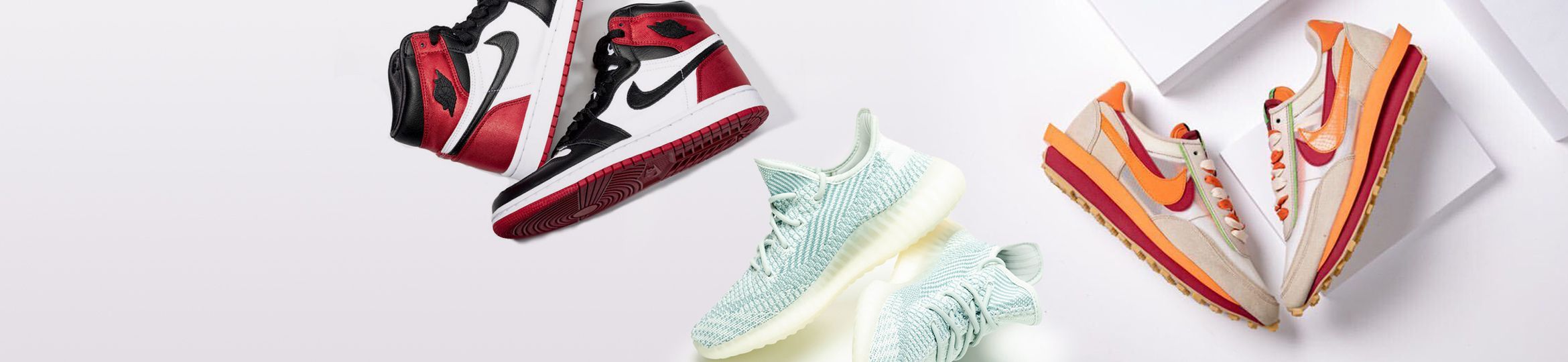
Is It Legal to Resell Branded Sneakers? Copyright, Trademark & First Sale Doctrine

Is it legal to resell branded sneakers? This guide covers everything you need to know. The sneaker resale market moves billions of dollars annually. But if you are thinking about reselling branded sneakers — or you are already doing it — a critical question looms: is it actually legal? The answer is nuanced. Under U.S. law, reselling authentic, legitimately purchased branded products is generally legal thanks to a doctrine that has existed for over a century. But the moment you step outside certain boundaries, you enter territory where trademark holders can — and do — enforce their rights aggressively.
This article explains the legal framework governing sneaker resale, where the lines are drawn, and why an increasing number of entrepreneurs are choosing private label manufacturing as a way to eliminate intellectual property risk entirely.
The First Sale Doctrine: The Foundation of Resale Legality
The First Sale Doctrine is the legal principle that makes the entire secondary market possible — not just for sneakers, but for books, electronics, art, and virtually every physical product. It is codified in U.S. copyright law (17 U.S.C. § 109) and reinforced by trademark law through a series of court decisions.
What the First Sale Doctrine says
In simple terms: once a trademark holder (or its authorized distributor) sells a genuine, authentic product, the buyer is free to resell that specific product without needing further permission from the trademark holder. The trademark holder's rights are "exhausted" after the first sale. This is why you can legally:
- Buy a pair of sneakers at retail and resell them on a marketplace.
- Buy inventory from an authorized dealer and resell it through your boutique.
- Purchase sneakers at a discount store and flip them for a profit.
- Sell your personal sneaker collection online.
The doctrine exists because without it, manufacturers could control every downstream transaction — effectively preventing any secondary market and locking consumers into purchasing only from authorized channels. The law protects the free flow of goods.
The limits of the First Sale Doctrine
The First Sale Doctrine is not a blanket protection. It applies only when several conditions are met:
- The product must be genuine. The doctrine protects resale of authentic products. Counterfeits are never protected, regardless of whether you knew they were fake.
- The product must have been sold legitimately the first time. Goods that were stolen, obtained through fraud, or diverted from factory overruns without authorization may not be protected.
- The product must not be materially altered. If you modify the product in a way that changes its character or could confuse consumers about its origin, the First Sale protection may not apply.
- The trademark must not be used deceptively. You can use the brand name to describe the product you are selling (e.g., "authentic brand-name sneakers"), but you cannot use it in a way that implies you are an authorized dealer or that the brand endorses your business.
These limitations are where most legal trouble in sneaker resale originates. Let us examine each risk area.
Trademark Law vs. Copyright Law in Sneaker Resale
Two bodies of intellectual property law are relevant to sneaker resale, and they operate differently. Understanding the distinction is essential.
Trademark law
Trademarks protect brand identifiers — logos, brand names, and distinctive markings that indicate the source of a product. In the sneaker world, the swoosh, the three stripes, the jumpman silhouette, and similar marks are trademarks. Trademark law exists to prevent consumer confusion: a buyer should be able to trust that a product bearing a certain mark actually comes from the company that owns that mark.
For resellers, trademark law creates two obligations:
- Do not sell counterfeit goods. Selling fake sneakers bearing a genuine trademark is trademark infringement, regardless of your intent.
- Do not use the trademark in a way that implies authorization. You can say "these are authentic brand-name sneakers." You cannot say "I am an authorized retailer of brand-name sneakers" unless you actually are.
Copyright law
Copyright protects original creative works — including, potentially, certain design elements of a product. In the sneaker context, copyright is less commonly invoked than trademark, but it can apply to distinctive graphic patterns, artwork printed on the shoe, or marketing photography.
For resellers, the primary copyright risk is using the brand's marketing images. If you photograph the sneakers yourself, you are fine. If you download the brand's official product photos and use them in your listings, you may be committing copyright infringement — even if the sneakers themselves are authentic and your sale is legal under the First Sale Doctrine.
Design patents and trade dress
A third layer of protection exists: design patents and trade dress. These protect the ornamental design of a product — the distinctive visual shape or configuration that identifies a particular product. Major sneaker brands have used design patents and trade dress claims to go after not just counterfeiters but also competitors who produce shoes that look substantially similar to protected designs. This is more relevant to manufacturers than resellers, but it matters if you ever consider producing your own sneakers inspired by existing designs.
The Counterfeit Trap: The #1 Legal Risk for Sneaker Resellers
If there is a single legal threat that has destroyed sneaker reselling businesses, it is counterfeit goods. And the danger is not just to the business — it extends to personal liability in many cases.
Why counterfeit risk is so high in sneakers
The sneaker market has unique characteristics that make counterfeiting rampant:
- High demand and limited supply — Scarcity drives prices up, creating massive profit incentives for counterfeiters to fill the gap.
- Sophisticated fakes — Modern counterfeit sneakers can be nearly indistinguishable from authentic pairs, even to experienced buyers. Some counterfeiters use similar materials and construction methods.
- Opaque supply chains — Many resellers source from secondary wholesalers, online marketplaces, and overseas suppliers where authenticity is difficult to verify independently.
- Pressure to find deals — The thinner the margin, the more tempting an unusually cheap "wholesale" offer becomes.
The legal consequences of selling counterfeit sneakers
Selling counterfeit goods is not a slap on the wrist. The consequences can include:
- Civil lawsuits — Brand owners can sue for trademark infringement, with statutory damages ranging from $1,000 to $200,000 per counterfeit mark per type of goods sold. Willful infringement can push damages to $2,000,000 per mark.
- Seizure and destruction — Customs and Border Protection (CBP) can seize counterfeit imports at the border, and courts can order the destruction of counterfeit inventory.
- Marketplace bans — Platforms like eBay, StockX, and social media marketplaces have zero-tolerance policies for counterfeits. A single violation can result in permanent account suspension and frozen funds.
- Criminal charges — In cases involving large-scale counterfeit operations, federal prosecutors can bring criminal charges under the Trademark Counterfeiting Act, carrying penalties of up to 10 years imprisonment for first offenses and up to 20 years for repeat offenses.
"I didn't know it was fake" is not a defense
One of the most dangerous misconceptions in sneaker resale is the belief that ignorance protects you. It does not. Trademark infringement is a strict liability offense in many contexts — meaning your intent (or lack thereof) is irrelevant. If you sell a counterfeit pair, you are liable whether you knew it was fake or not. The brand does not need to prove you intended to deceive anyone.
This is why sourcing is the single most critical legal protection for a sneaker reseller. You must be able to trace every pair you sell back to a legitimate source — an authorized retailer, an authorized distributor, or a direct purchase from the brand. Buying from anonymous online sellers, unverified overseas suppliers, or "wholesale" channels that cannot provide authentication documentation is a legal time bomb.
Gray Market Sneakers: Legal but Risky
A separate category from counterfeits is "gray market" goods — authentic products that are sold through unauthorized distribution channels. This often happens when sneakers produced for one market (e.g., a different country) are imported and sold in another market without the brand's authorization.
Are gray market sneakers legal to resell?
The legality of gray market goods is complex and depends on specific circumstances. Under the First Sale Doctrine, if the authentic product was first sold by the trademark holder (or with its authorization) anywhere in the world, resale in the U.S. may be protected. However, the U.S. Supreme Court case Kirtsaeng v. John Wiley & Sons (2013) established that the First Sale Doctrine applies to goods made and sold abroad, strengthening the resale position — but subsequent cases have created nuance around gray market goods that are materially different from domestic versions.
For sneaker resellers, the gray market risk is less about legality and more about practical consequences:
- Brands may send cease-and-desist letters even when resale is technically legal, betting that the reseller will not have the resources to fight.
- Marketplaces may side with the brand in disputes, removing listings and suspending accounts.
- Quality differences between regional versions of the same model can lead to customer complaints and returns that damage your reputation.
Brand Enforcement: How Major Sneaker Brands Protect Their IP
Major sneaker brands are among the most aggressive enforcers of intellectual property rights in the retail world. Understanding how they enforce their rights helps you understand the risk landscape.
Nike's trademark enforcement
Nike is the most aggressively enforced brand in the sneaker space. The company maintains a dedicated brand protection division that monitors marketplaces, social media, and customs channels for counterfeit and unauthorized sales. Nike has filed thousands of lawsuits against counterfeiters and has successfully pushed platforms to implement stricter authentication processes. Nike's trademark portfolio includes not just the swoosh logo but also the Air Jordan silhouette, the Air Max visible air unit design, and numerous model-specific trade dress elements.
Adidas and the three stripes
Adidas is similarly aggressive, particularly around its three-stripe mark, which it has defended in numerous trademark disputes. Adidas has sued competitors, counterfeiters, and even parody producers, arguing that any use of a three-stripe configuration on footwear infringes its trademark. The company has also pushed platforms to remove listings that it believes infringe its rights, sometimes controversially.
How enforcement affects resellers
Even if you are selling authentic product, brand enforcement can affect your business:
- Listing removals — Brands can request that marketplaces remove listings they believe are counterfeit or unauthorized, even incorrectly. Fighting an erroneous removal can take weeks.
- Account suspensions — Multiple flagging incidents can result in account suspension before you have a chance to prove authenticity.
- Authentication barriers — Platforms like StockX and GOAT have implemented authentication processes that add cost and delay to every transaction.
- Price policing — Some brands enforce MAP (minimum advertised price) policies through authorized dealer agreements. While these do not directly bind secondary-market resellers, they create a pricing environment that can squeeze margins.
Where Resellers Get Into Legal Trouble
Based on the legal framework and enforcement landscape, here are the specific scenarios where sneaker resellers most commonly face legal problems:
- Sourcing from unverified suppliers — Buying "wholesale" sneakers from anonymous overseas sellers or unverified online suppliers is the fastest path to inadvertently selling counterfeits.
- Modifying branded products — Customizing branded sneakers (painting, adding embellishments, modifying logos) and reselling them can cross the line from protected resale into trademark infringement, because you are creating a "materially different" product.
- Implying authorization — Using brand names in your business name, domain name, or marketing in a way that implies you are an authorized dealer when you are not.
- Using copyrighted marketing materials — Downloading and using a brand's official product photos, ad campaigns, or lifestyle imagery in your listings.
- Selling factory variants or B-grades as authentic — Factory overruns, rejected quality-control units, and unauthorized production runs may look authentic but may not be protected by the First Sale Doctrine because they were never legitimately "first sold" by the brand.
The Private Label Pivot: Why Owning Your Brand Eliminates IP Risk
Everything described above — the First Sale Doctrine complexities, the counterfeit sourcing risks, the gray market ambiguity, the brand enforcement exposure — exists because you are selling someone else's intellectual property. Every pair of branded sneakers you resell carries the brand's trademarks, the brand's design patents, the brand's copyright-protected marketing materials, and the brand's enforcement apparatus.
Private label manufacturing eliminates all of it.
How private label works
Private label manufacturing means you work directly with a factory to produce sneakers under your own brand. You provide the design specifications — style, materials, colorways, logo, packaging — and the factory produces to your specifications. The finished product carries your brand name, not anyone else's.
Platforms like Hotmartz have made this process accessible to entrepreneurs at scale, with low MOQs that make brand ownership feasible without massive capital. You can launch a sneaker line with your own logo, your own designs, and your own packaging — and never worry about whether your supplier's goods are authentic, whether your listings will be flagged, or whether a brand's legal team will come knocking.
The legal peace of mind
Here is what disappears when you own the brand:
- No counterfeit risk — You are the manufacturer's client, not a downstream buyer. The product is authentic by definition because it is your brand.
- No trademark infringement exposure — You are not using anyone else's marks. Your marks are your own.
- No gray market complications — There is no unauthorized distribution channel because you control distribution.
- No MAP pricing conflicts — You set the price because you are the brand.
- No platform authentication friction — Marketplaces do not authenticate your product against a brand's database because you are the brand.
- No brand enforcement actions — No one can send you a cease-and-desist for selling your own product.
The business case aligns with the legal case
The legal advantages of private label align with the business advantages. When you resell branded sneakers, your margins are squeezed between the brand's wholesale price and the brand's MAP policy. When you own the brand, your cost is manufacturing cost and your ceiling is the market's willingness to pay. Margins typically expand from 15–30% (branded resale) to 50–70% (private label).
You also build an asset. A reselling operation has no equity — stop reselling and you have nothing. A private label brand has a trademark, a product line, a customer base, and brand recognition. All of these are transferable, sellable assets.
Should You Resell Branded Sneakers or Build Your Own Brand?
If you are deciding between these two paths, consider the following framework:
Reselling branded sneakers makes sense if:
- You have reliable access to authentic, verifiable inventory at competitive prices.
- You are operating in the short term and not building a long-term asset.
- You have the expertise to authenticate sneakers and the systems to verify every sourcing channel.
- You are comfortable with the legal risks and have liability protection in place.
Building a private label brand makes sense if:
- You want to build a long-term, sellable business asset.
- You want higher margins and pricing control.
- You want to eliminate IP and counterfeit risk entirely.
- You have a design vision and a target customer in mind.
- You want to scale without being dependent on another brand's supply chain and enforcement decisions.
For an increasing number of entrepreneurs in 2026, the calculation is clear: the risks and thin margins of branded resale no longer justify the effort when private label manufacturing is accessible, affordable, and structurally safer.
Eliminate IP Risk. Own Your Brand.
Stop navigating trademark law, counterfeit risk, and brand enforcement. Launch your own private label sneaker brand with Hotmartz — low MOQs, full design control, and zero intellectual property headaches.
Build Your Private Label BrandFrequently Asked Questions
Is it legal to resell sneakers you bought at retail?
Yes. Under the First Sale Doctrine, once you legitimately purchase an authentic product, you have the right to resell that specific product without needing the trademark holder's permission. This applies to sneakers purchased at retail stores, authorized dealers, or directly from the brand. The key requirements are that the product is genuine, was first sold legitimately, and is not materially altered before resale.
Can I get sued for selling counterfeit sneakers by accident?
Yes. Trademark infringement for counterfeit goods is strict liability in many contexts, meaning your intent is irrelevant. If you sell a counterfeit pair — even if you believed it was authentic — you can be held legally liable. This is why sourcing verification is critical. Always trace your inventory to a legitimate, authorized source and keep documentation of your purchases.
Can I use brand names and logos in my resale listings?
You can use brand names to accurately describe the product you are selling (e.g., "authentic Nike Air Max sneakers"). This is nominative fair use. However, you cannot use brand logos or trademarks in a way that implies you are an authorized dealer, that the brand endorses your business, or that creates consumer confusion about your relationship with the brand. Using the brand's official marketing photography may also constitute copyright infringement.
Does the First Sale Doctrine apply to sneakers bought from overseas?
Generally yes, following the Supreme Court's Kirtsaeng decision, the First Sale Doctrine applies to authentic goods made and sold abroad. However, gray market goods — authentic products sold through unauthorized channels — can still create practical problems including marketplace listing removals, brand cease-and-desist letters, and customer quality complaints. The legality and the practical risks are not always aligned.
How does private label manufacturing eliminate legal risk?
Private label means you commission a factory to produce sneakers under your own brand name. Since you own the brand and the trademark, there is no risk of trademark infringement, no counterfeit risk (you are the source), no First Sale Doctrine complexity, no MAP pricing conflicts, and no brand enforcement exposure. You control the entire supply chain and distribution channel. Platforms like Hotmartz make this accessible with low MOQs designed for first-time brand builders.
This article is for educational purposes only and does not constitute legal advice. Intellectual property law is complex and fact-specific. If you are operating or planning a sneaker resale business, consult a qualified attorney specializing in trademark and intellectual property law. Brand names are referenced in this article solely for educational and legal context. Case law and statutes evolve — verify current legal standards with a licensed professional.