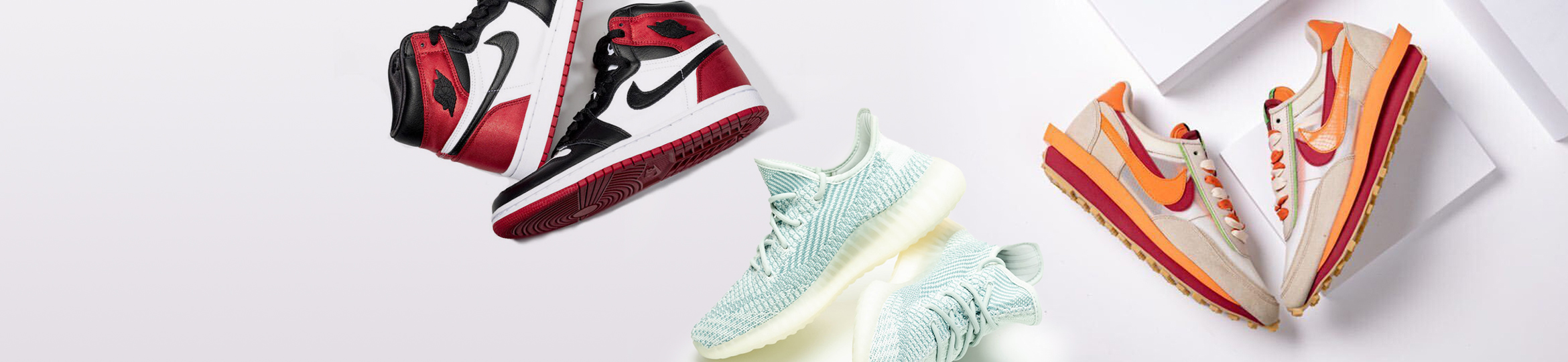
Current Status of the Luxury Sports Shoe Wholesale Market

Luxury Sneakers Wholesale: The High-Risk, High-Reward Market
Luxury sneakers — the Louis Vuitton Trainers, the Balenciaga Triple S, the Dior B23s, the Gucci Rhyton — occupy a strange and dangerous corner of the wholesale world. The profit potential is enormous: a pair of LV Trainers bought at $450 wholesale can resell for $850–$1,100. But the risks are equally enormous: counterfeits are rampant, gray market supply is tangled with criminal enterprise, and the buyer base is small, demanding, and unforgiving of mistakes.
I've been selectively involved in luxury sneaker wholesale for about six years. I don't recommend it as a starting point for anyone, but for experienced wholesale buyers with capital, authentication expertise, and a tolerance for complexity, it can be a significant profit center. Here's what I've learned.
The Luxury Sneaker Landscape
| Brand | Key Model | Retail | Wholesale Est. | Resale | Fake Risk |
|---|---|---|---|---|---|
| Louis Vuitton | LV Trainer, LV Skate | $990 – $1,490 | $450 – $750 | $800 – $1,200 | Extremely High |
| Balenciaga | Triple S, Track, Speed 3.0 | $750 – $1,150 | $300 – $550 | $550 – $900 | Very High |
| Gucci | Rhyton, Ace, Screener | $620 – $950 | $250 – $450 | $480 – $780 | High |
| Dior | B23, B27, D-Connect | $890 – $1,250 | $380 – $600 | $700 – $1,050 | Very High |
| Prada | America's Cup, Cloudbust | $695 – $995 | $250 – $420 | $480 – $800 | High |
Note: the wholesale prices I've listed are estimates based on observed gray market and legitimate liquidation transactions. There is no official "luxury sneaker wholesale program" for any of these brands — they do not sell to independent resellers. Every wholesale source is secondary market: employee sales, retailer overstock, liquidated inventory, or — in the grayest areas — diverted production.
The Luxury Wholesale Supply Chain Reality
I need to be very direct about this because I see too many people get burned: the luxury sneaker wholesale market is not a market in the traditional sense. It's a series of disconnected, opaque relationships.
Legitimate luxury sneaker wholesale typically comes from three channels:
- Department store overstock and returns. Saks Fifth Avenue, Nordstrom, Neiman Marcus, and European equivalents (Harrods, Galeries Lafayette) sometimes liquidate excess luxury inventory through specialized channels. These are legitimate, authenticated goods. The catch is access: these liquidation channels are often invitation-only or require substantial minimum purchases ($25,000+).
- Employee and friends-and-family sales. Luxury brand employees receive generous discounts (often 50–70% off retail) and can purchase limited quantities. Some employees resell these purchases, creating a small but legitimate secondary supply. Building relationships with brand employees is the most common "in" for small-scale luxury wholesale.
- European outlet and sample sale inventory. Luxury outlet stores (The Mall in Florence, Bicester Village in the UK, La Vallée Village near Paris) carry previous-season luxury sneakers at 30–50% off retail. Buying in bulk from these outlets and reselling — known as "outlet arbitrage" — is legal and provides authentic inventory. The margins are thinner because you're buying at retail-discount rather than true wholesale, but the authenticity risk is zero.
Everything else — the "factory-direct LV Trainers at $200/pair from a guy on WhatsApp" — is counterfeit. Every time. No exceptions. Louis Vuitton does not have factory overflow. Balenciaga does not sell unauthorized production runs through agents in Putian. If the price is too good to be true in luxury sneakers, it's fake.
Authentication: Non-Negotiable Protocols
Luxury sneaker counterfeits have reached a terrifying level of sophistication. I've seen LV Trainer replicas that required microscopic examination to distinguish from authentic pairs. If you're entering luxury wholesale, you need a multi-layered authentication protocol:
- Third-party authentication services. Use Legit Check, Authenticate First, or Real Authentication for every pair. These services employ former luxury brand authenticators who know the specific manufacturing tells for each model and production year. Cost is $10–$30 per authentication.
- Original receipt verification. For any pair claimed to be from a department store or boutique, demand the original receipt and verify it against the store's transaction system. Saks and Nordstrom can verify purchases by receipt number.
- RFID/NFC chip scanning. Most modern luxury sneakers (LV, Gucci, Balenciaga post-2020) contain embedded NFC chips that authenticate to the brand's database. Use an NFC reader app to verify. Counterfeiters cannot replicate these chips.
- Weight and material analysis. Authentic luxury sneakers use specific, expensive materials: Italian calfskin leather, Vibram soles, specific hardware finishes. Weigh every pair against known reference weights. Counterfeit pairs are almost always lighter due to cheaper materials.
Is Luxury Sneaker Wholesale Worth It?
My honest assessment: for 90% of wholesale sneaker buyers, luxury is not worth the headache. The authentication burden, the capital intensity ($450+ per pair wholesale), the smaller buyer base, and the risk of counterfeit losses create a risk-adjusted return that's often worse than sticking with Nike, Jordan, or Adidas.
However, for the 10% who have the capital, the authentication expertise, and the buyer network, luxury sneakers can generate profit per pair that no other category matches. A successful LV Trainer flip at $450 wholesale → $950 resale yields $500 gross profit from a single transaction. You'd need to sell 8–10 pairs of Dunks to generate the same profit.
My personal allocation: luxury sneakers are 5–8% of my total wholesale portfolio. I treat it as a high-risk satellite holding, not a core strategy. When I find a verified source (department store liquidation, employee sale access), I deploy capital aggressively. When I don't, I stay out of the market entirely. Never chase luxury deals — the scammers know that desperation creates victims.
FAQ
Q: Can I start luxury sneaker wholesale with a small budget?
Realistically, no. The minimum viable luxury wholesale order is $5,000–$10,000, which buys you 8–15 pairs at wholesale pricing. But I wouldn't recommend entering this category with less than $20,000–$30,000 dedicated capital because you need to absorb authentication failures (at least 5–10% of "wholesale luxury" offers turn out to be counterfeit) and you need enough inventory diversity to attract luxury buyers. The luxury buyer base is small — you can't rely on StockX/GOAT velocity the way you can with sneakers. Start with outlet arbitrage (buying at luxury outlet stores and reselling) as a low-risk entry point before committing significant capital to gray market channels.
Q: What's the most profitable luxury sneaker to wholesale?
Louis Vuitton Trainer (the original high-top, not the Skate). The LV Trainer has been in production since 2019, has multiple colorways that trade above retail, and benefits from LV's strict supply control (they don't overproduce). Wholesale, when you can find it legitimately, is typically $500–$700. Resale is $900–$1,200 for desirable colorways. Profit per pair: $300–$500. The challenge is finding authentic wholesale supply — LV has the tightest control of any luxury brand. Most available LV wholesale pairs come from department store returns and employee resale.
Q: Where do I sell luxury sneakers?
StockX and GOAT support luxury sneakers but the buyer base there is smaller and more price-sensitive. Better channels: The RealReal (luxury-specific resale platform), Vestiaire Collective (European luxury resale, strong in LV and Gucci), Grailed (streetwear-adjacent luxury), and direct-to-buyer through Instagram/WhatsApp luxury resale communities. Luxury buyers often prefer to transact directly rather than through platforms, which saves you the 15–25% platform fees. Building a direct luxury buyer network is the highest-ROI activity you can do in this category.
Q: What about "luxury sportswear" lines like Dior x Jordan or LV x Nike?
These collaboration models (Dior x Air Jordan 1, LV x Nike Air Force 1) are the holy grail of sneaker wholesale — but they also attract the most sophisticated counterfeiters. The Dior AJ1 retailed for $2,000 and trades at $6,000–$10,000 depending on size. The LV AF1 retailed for $2,750 and trades at $5,000–$15,000. Authentic wholesale access for these models is virtually nonexistent — they were produced in tiny quantities and sold through VIP client lists. Any "wholesale Dior AJ1" offer you see is fake. These are collector-grade assets, not wholesale inventory.
Q: Is the Golden Goose category worth wholesaling?
Yes, and it's the most accessible luxury-adjacent sneaker for wholesale. Golden Goose (retail $500–$700) has a distinct pre-distressed aesthetic that's difficult to counterfeit well. Wholesale sources include department store overstock (Nordstrom, Saks) and European outlet channels. Wholesale pricing typically $180–$280, resale $350–$500. Margins of 35–50% with less counterfeit risk than LV or Balenciaga because the distressed finishing is genuinely hard to replicate. This is my recommended entry point for buyers interested in luxury-adjacent sneaker wholesale.