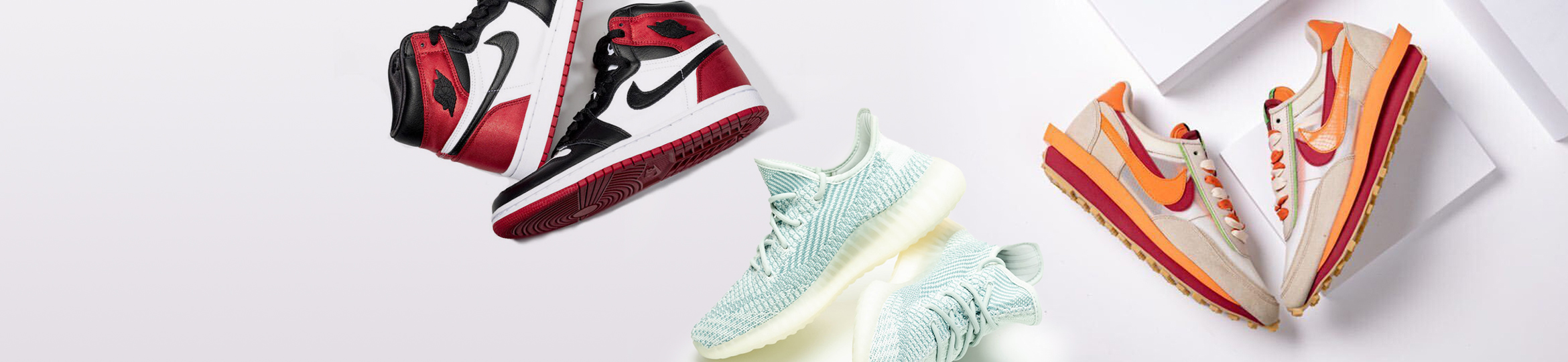
wholesale sneakers buying guide

The definitive guide to sourcing, buying, and importing wholesale sneakers — covering supplier verification, MOQ negotiation, pricing models, shipping logistics, payment protection, and inventory strategy for resellers and retail buyers.
I've been sourcing sneakers at wholesale for the better part of a decade. I've dealt with factories in Putian that produce legitimate shoes for major brands and factories in the same city that produce convincing counterfeits. I've navigated MOQ negotiations where suppliers quoted me 2,000 pairs minimum and I walked away with 300. I've lost money on shipping cost miscalculations, gotten burned on payment terms I didn't fully understand, and learned — through expensive trial and error — what actually works when buying sneakers at wholesale scale.
This guide is everything I wish someone had told me when I started. It's not theoretical. Every recommendation here comes from real transactions, real mistakes, and real numbers. If you're buying sneakers to resell — whether on StockX, GOAT, eBay, your own Shopify store, or a brick-and-mortar shop — this is the complete playbook.
Why Wholesale Sneaker Sourcing Is Harder Than It Looks
The sneaker wholesale market is opaque by design. Unlike consumer electronics or apparel, where supplier directories and trade shows make sourcing relatively straightforward, sneaker manufacturing is concentrated in a handful of regions — primarily Fujian and Guangdong provinces in China, with secondary hubs in Vietnam, Indonesia, and India — and the supply chain is intentionally difficult to navigate for outsiders.
Nike, Adidas, and other major brands contract manufacturing through tightly controlled networks. Officially, these factories don't sell to third parties. Unofficially, the same factories — or sister factories under the same ownership — often produce excess inventory, overruns, and B-grade product that enters the gray market. Understanding which suppliers have access to legitimate product versus counterfeit operations is the single most important skill in sneaker wholesale.
The global sneaker manufacturing market was valued at approximately $130 billion in 2024, with China accounting for roughly 55% of global production volume. The wholesale and gray market segment — the space where independent buyers operate — represents an estimated $8-12 billion of that total, though precise figures are impossible to verify due to the market's informal nature.
The Complete Wholesale Buying Process: 7 Phases
Every successful wholesale sneaker purchase follows the same seven-phase process. Skip a phase, and you're gambling. I've broken down each phase in dedicated articles (linked throughout this guide), but here's the overview:
| Phase | What Happens | Time Required | Biggest Risk |
|---|---|---|---|
| 1. Market Research | Identify demand, trending silhouettes, target margins | 1-2 weeks | Buying what you like vs. what sells |
| 2. Supplier Sourcing | Find 5-10 potential suppliers, filter to 2-3 finalists | 2-4 weeks | Falling for a scam operation |
| 3. Verification | Business licenses, factory audits, sample orders | 1-3 weeks | Skipping verification to save time |
| 4. Negotiation | Price, MOQ, payment terms, delivery timeline | 1-2 weeks | Agreeing to terms you can't enforce |
| 5. Payment & Production | Deposit, production monitoring, quality control | 2-6 weeks | No recourse if production goes wrong |
| 6. Shipping & Customs | Freight forwarding, customs clearance, duties | 2-8 weeks | Hidden costs that destroy margins |
| 7. Receipt & QC | Inspect inventory, handle defects, list for sale | 1-2 weeks | Discovering quality issues too late |
Total timeline from research to inventory in hand: 8-20 weeks for a first-time buyer with a new supplier. Repeat orders with established suppliers can compress this to 4-8 weeks. The biggest mistake new buyers make is underestimating the timeline and overestimating their ability to shortcut the process.
Understanding the Supplier Landscape
Not all sneaker suppliers are created equal. I categorize them into five tiers, each with different risk profiles, price points, and product quality:
Tier 1: Authorized Distributors
These are officially licensed by the brand (Nike, Adidas, etc.) to distribute to retailers. They carry legitimate product, full authentication, and brand warranty. The catch: they require business verification, retail license, and typically enforce MAP (Minimum Advertised Price) policies. Prices are 15-25% below retail. Most independent resellers can't access this tier without a brick-and-mortar store and established retail business.
Tier 2: Factory Overruns and B-Grade
Same factories that produce for major brands, selling excess production or quality-reject items. The product is genuine — same materials, same construction — but may have minor cosmetic defects (glue marks, stitching irregularities) that didn't pass brand QC. Prices run 30-50% below retail. This is the sweet spot for resellers who can sell B-grade as "near-perfect" or through channels where minor defects are acceptable.
Tier 3: Gray Market Traders
Intermediaries who buy from factories, authorized distributors, or overstock liquidators and resell to smaller buyers. They add a markup (5-15%) but provide value through lower MOQs, consolidated shipping, and English-language communication. Product quality varies — some are legitimate, others mix authentic with replica stock. Verification is critical at this tier.
Tier 4: Replica/Counterfeit Manufacturers
Factories producing unauthorized copies of branded sneakers. Quality ranges from obvious fakes (Tier 1 replicas, $15-25/pair) to near-identical copies (Tier 5 replicas, $40-60/pair) that can fool authentication experts. I don't recommend this tier — the legal risk, ethical issues, and long-term business sustainability make it a losing strategy. But I mention it because you need to know when you're being offered product from this tier disguised as legitimate.
Tier 5: Liquidators and Closeout Buyers
Companies that purchase excess inventory from retailers, brands, or other wholesalers at deep discounts and resell in bulk. Product is authentic but often outdated models, unpopular colorways, or seasonal overstock. Prices can be 40-60% below retail, but selection is unpredictable. Good for filling inventory gaps, not for sourcing specific high-demand models.
| Supplier Tier | Price vs. Retail | Typical MOQ | Authenticity Risk | Access Difficulty |
|---|---|---|---|---|
| Authorized Distributor | -15% to -25% | 500-1,000 | None | Very High |
| Factory Overrun/B-Grade | -30% to -50% | 200-500 | Low (verify factory) | High |
| Gray Market Trader | -25% to -40% | 50-200 | Medium-High | Medium |
| Replica Manufacturer | -60% to -80% | 10-100 | 100% (counterfeit) | Low |
| Liquidator/Closeout | -40% to -60% | 100-500 | Low (if verified) | Medium |
Pricing: What You Should Actually Pay
The most common question I get is: "What's a fair wholesale price for sneakers?" The answer depends on the model, the supplier tier, and the order volume, but here are the benchmarks I use based on hundreds of transactions:
For mid-range sneakers (retail $80-$120 — think standard Nike Air Force 1, Adidas Ultraboost, ASICS Gel-Kayano):
- Authorized distributor: $60-$90 per pair (25-30% below retail)
- Factory overrun: $40-$65 per pair (45-55% below retail)
- Gray market trader: $45-$70 per pair (40-50% below retail)
- Liquidator: $30-$55 per pair (50-65% below retail)
For premium/lifestyle sneakers (retail $150-$250 — Jordan Retro, Nike Dunk, New Balance 990):
- Authorized distributor: $110-$175 per pair (25-30% below retail)
- Factory overrun: $75-$120 per pair (50-55% below retail)
- Gray market trader: $80-$135 per pair (45-50% below retail)
- Liquidator: $60-$100 per pair (55-65% below retail)
For highly limited/hype releases (retail $180-$250, resale $300-$800 — Travis Scott, Off-White, limited Jordan collabs): don't expect to source these at wholesale. The supply is too controlled. If a supplier offers you Travis Scott Jordans at "wholesale prices," they're either scamming you or selling replicas. The legitimate supply chain for these models doesn't have a wholesale tier accessible to independent buyers.
MOQ: What Suppliers Quote vs. What You Can Actually Negotiate
MOQ (Minimum Order Quantity) is where most new buyers get stuck. A supplier quotes 1,000 pairs minimum, the buyer needs 200, and the conversation ends. But MOQ is almost always negotiable — it's an opening position, not a final offer.
The key insight: MOQ is tied to production efficiency. Factories set MOQ based on the minimum batch size that makes economic sense for their production line. For injection-molded sneakers (most modern construction), the mold setup cost is amortized across the batch. A 500-pair run might cost $8/pair in setup overhead; a 2,000-pair run drops that to $2/pair. The supplier isn't being greedy — they're covering their fixed costs.
But there are four legitimate ways to reduce MOQ without asking the supplier to lose money: (1) accept a higher per-unit price that covers their setup overhead, (2) order from existing stock or in-production runs rather than custom production, (3) consolidate multiple models/colors within the same order to reach the factory's total volume threshold, or (4) partner with other buyers to place a group order. I cover all four strategies in detail in the MOQ Complete Guide.
| Sneaker Type | Stated MOQ | Negotiated MOQ (Realistic) | Strategy |
|---|---|---|---|
| Standard models (AF1, Stan Smith) | 500-1,000 | 200-300 | From existing stock |
| Premium models (Jordan, Dunk) | 1,000-2,000 | 300-500 | Pay setup premium (+15-20%) |
| Running shoes (ASICS, NB) | 300-800 | 100-200 | Multi-model consolidation |
| Custom/private label | 2,000-5,000 | 1,000-1,500 | Group order / co-production |
| B-Grade / overruns | 100-300 | 50-100 | Direct ask, fast turnaround |
Shipping and Customs: The Hidden Margin Killer
I've seen buyers negotiate a great per-unit price, only to lose their entire margin on shipping and customs. The landed cost — the total cost of getting product from the factory to your warehouse, including freight, insurance, customs duties, and last-mile delivery — is what actually determines your profitability.
Here's what the shipping cost breakdown looks like for a typical order of 500 pairs from China to the US in 2026:
| Cost Component | Sea Freight (LCL) | Air Freight | Express (DHL/FedEx) |
|---|---|---|---|
| Freight cost (500 pairs) | $450-$650 | $1,200-$1,800 | $2,500-$3,500 |
| Transit time | 25-35 days | 7-12 days | 3-7 days |
| US customs duty (Footwear HTS 6404) | 8.5-37.5% | 8.5-37.5% | 8.5-37.5% |
| Section 301 tariff (China origin) | +7.5-25% | +7.5-25% | +7.5-25% |
| Merchandise processing fee | ~$485 | ~$485 | ~$485 |
| Insurance | $50-$80 | $80-$120 | Included |
| Per-pair shipping cost | $3-$5 | $8-$12 | $15-$22 |
| Per-pair total w/ duties | $8-$18 | $13-$25 | $20-$35 |
The critical takeaway: duties and tariffs can add $5-$18 per pair on top of freight costs, depending on the shoe's HTS classification and country of origin. Footwear duties in the US are among the highest of any consumer product category — the famous "shoe tax" that has been debated in Congress for over a decade. Section 301 tariffs on Chinese goods add another 7.5-25%, and the elimination of the $800 de minimis exemption in 2025 means even small shipments now face full duty assessment. Use the Shipping Cost Calculator for a detailed breakdown on your specific order.
Payment Terms: Protecting Your Money
The payment structure you agree to determines your risk exposure. I've seen buyers lose five-figure sums because they wired 100% upfront to a supplier who disappeared. Here's the risk hierarchy of payment methods, from safest to riskiest:
Safest: Trade Assurance / Escrow — Platforms like Alibaba Trade Assurance, Escrow.com, or a trade finance facility through your bank hold funds until you confirm receipt and inspection. Disadvantage: adds 2-5% in fees, and not all suppliers accept these terms.
Standard: 30/70 Split — 30% deposit with order confirmation, 70% balance after production completion and quality inspection (with photos/videos before shipment). This is the industry standard for factory-direct orders. The 30% covers material costs; the 70% is your leverage to ensure quality.
Risky: 50/50 Split — 50% upfront, 50% on shipment. Gives the supplier more security but reduces your leverage. Only acceptable with established suppliers you've done multiple successful orders with.
Never: 100% Upfront — No legitimate supplier requires 100% payment before production. If they insist, walk away. This is the #1 red flag for scams. Full stop.
Quality Control: Don't Skip This
Quality control happens in three stages, and skipping any of them will cost you money:
Pre-production QC: Before the factory starts production, request material samples, color swatches, and a specification sheet. Confirm the materials match what you ordered. This prevents the "we ran out of the specified material so we substituted" problem that destroys product quality.
In-line QC: During production (roughly 30-50% complete), request photos or videos of the production line. This is when you catch issues like incorrect stitching patterns, wrong sole color, or size run deviations. The factory can still correct these mid-production without significant cost.
Final inspection: Before shipment, inspect (or hire a third-party inspector to inspect) a statistical sample of the finished product. AQL (Acceptable Quality Limit) sampling — typically Level II, 2.5% for major defects and 4.0% for minor defects — is the industry standard. If defect rates exceed the AQL, you reject the batch and withhold final payment until the issue is resolved. For detailed QC checklists, see the Supplier Verification Guide and Returns & Defects Guide.
Building a Supplier Relationship That Lasts
The most valuable asset in sneaker wholesale isn't your inventory — it's your supplier relationships. A reliable supplier who gives you priority production slots, alerts you to new stock availability, and offers flexible terms on MOQ and payment is worth more than any single order.
I've maintained relationships with three core suppliers for over five years. Here's what I've learned about making those relationships work:
- Pay on time, every time. This sounds obvious, but you'd be amazed how many buyers try to delay payment or renegotiate terms post-production. Suppliers talk to each other. Your payment reputation precedes you.
- Start small and scale. Your first order should be a trial — even if the MOQ is higher than you'd like. Prove you're a serious buyer who follows through, and the supplier will offer better terms on subsequent orders.
- Communicate clearly and professionally. Use written communication (email, WeChat, WhatsApp) for everything. Verbal agreements don't exist in international trade. Confirm every specification, every timeline, every price in writing.
- Visit the factory if you can. Nothing builds trust like showing up. If you're placing $50,000+ orders, a trip to Fujian or Guangdong is worth the investment. The suppliers who know you in person treat you differently.
- Don't squeeze on every penny. If a supplier's price is fair and their quality is consistent, don't constantly renegotiate for 2% lower. The savings aren't worth the relationship damage. Negotiate hard on the first order; build trust on the repeat orders.
Common Mistakes That Cost Real Money
I'll close with the mistakes I see most often — all of which I've made myself at some point:
Buying without a sales plan. Sourcing is the easy part. Selling is where most resellers fail. Before you place a wholesale order, you should know exactly where and how you'll sell the inventory, at what price point, and what your expected sell-through timeline is. Buying first and figuring out sales later is how you end up with a garage full of unsold sneakers.
Underestimating landed cost. The per-unit price from the factory is not your cost. Add freight, duties, insurance, payment fees, and a 5-10% buffer for unexpected charges. If the landed cost doesn't leave you a 30%+ margin at your target selling price, the deal doesn't work.
Skipping the sample order. A $200 sample order can save you from a $20,000 mistake. Always order samples before committing to a production run. Inspect them yourself, or send them to an authentication service if you're sourcing branded product.
Not having a contract. A purchase order with detailed specifications, payment terms, delivery timeline, and quality acceptance criteria is your legal protection. It doesn't need to be a 50-page legal document — a clear, detailed PO signed by both parties is enforceable in most jurisdictions and through international trade arbitration.
Ignoring seasonality. Sneaker demand is seasonal. Ordering 2,000 pairs in August for delivery in October means you'll be selling into the November-December peak — good timing. Ordering the same quantity in January for March delivery means you're selling into the spring dead zone. Time your orders to the demand calendar.
The Deeper Dives
This pillar guide covers the full landscape. Each topic below has a dedicated deep-dive article with more granular detail, templates, and tools:
| Topic | What You'll Learn | Read Time |
|---|---|---|
| MOQ Negotiation Guide | 4 strategies to reduce MOQ, negotiation scripts, factory economics | 12 min |
| Shipping Cost Calculator | Landed cost breakdown, duty calculation, freight mode comparison | 10 min |
| 5 Pricing Models Compared | Cost-plus, tiered, volume-based, MAP, dynamic pricing for resellers | 14 min |
| Supplier Verification Guide | 10-point checklist, factory audit process, red flag indicators | 15 min |
| 7-Step Purchasing Process | From first contact to final delivery, with timeline templates | 13 min |
| Payment Methods & Risk Control | Payment term structures, escrow options, dispute resolution | 11 min |
| Returns & Defects Handling | AQL standards, defect classification, supplier accountability | 10 min |
| Small vs Bulk Orders | Decision framework, when to scale, risk management by order size | 9 min |
| Inventory Management | Stock velocity, SKU management, storage, sell-through optimization | 12 min |
| Supplier Evaluation Scorecard | 10-criteria scoring system, weighted evaluation, red flags | 8 min |
| Negotiation Templates | Email scripts, price negotiation, MOQ reduction, payment terms | 10 min |
Frequently Asked Questions
Can I buy authentic branded sneakers at wholesale prices?
Yes, through authorized distributors (requires retail license), factory overruns (B-grade with minor defects), or gray market traders (verify authenticity carefully). Expect 25-50% below retail depending on the tier. Be extremely cautious of suppliers offering major brand sneakers at 60-80% below retail — this price range almost always indicates counterfeit product. Legitimate wholesale margins for branded sneakers are significant but not absurd.
How much money do I need to start buying sneakers wholesale?
For a first order from a Chinese factory, budget $5,000-$15,000. This covers a 200-500 pair order at $30-$60/pair plus shipping, duties, and a contingency buffer. Gray market traders and liquidators may accept smaller orders ($2,000-$5,000) with higher per-unit prices. Don't invest more than you can afford to lose on a first order with a new supplier — treat it as a test transaction.
What's the minimum order quantity for wholesale sneakers?
Stated MOQs range from 300-2,000 pairs depending on the model and supplier type. Realistic negotiated MOQs for first-time buyers are 100-500 pairs. B-grade overruns and stock liquidation can go as low as 50-100 pairs. Custom/private label production requires 1,000-5,000 pairs minimum to justify mold and development costs. See the MOQ Negotiation Guide for strategies to reduce minimums.
How long does it take to receive a wholesale sneaker order?
From order confirmation to inventory in hand: 8-20 weeks for first-time orders with a new supplier (including verification and sampling). Repeat orders compress to 4-8 weeks. Production takes 2-4 weeks, sea freight adds 3-5 weeks, customs clearance 3-7 days. Air freight can cut shipping to 7-12 days but triples freight cost. Express shipping (DHL/FedEx) is 3-7 days but costs 5-7x sea freight — only viable for small, high-margin orders.
What profit margins can I expect from wholesale sneakers?
Gross margins of 30-60% are realistic for mid-range and premium sneakers sourced at wholesale and sold at or below retail. After platform fees (StockX 11-12.5%, GOAT 14.5%, eBay 13.25%), shipping, storage, and returns, net margins typically land at 15-30%. Heritage running shoes (ASICS, New Balance) currently offer the best margin-to-risk ratio. Hype releases offer higher margins but aren't accessible through wholesale channels — they require retail arbitrage or raffle wins.
Sources: Alibaba supplier data, LooperBuy 2026 Sourcing Guide, BonaShoes B2B Pitfalls Guide, ChinaShoe.cc MOQ Guide, Deepbeez Sneaker Duty Calculator, US Customs and Border Protection HTS data, B2Bridge Wholesale Margin Benchmarks, China Fulfillment 2026 Tariff Guide, KeytopShoes Factory Verification Checklist, industry trade data from Statista sneaker market reports.